
Search Arkansas Police Records
Arkansas police records track arrests, incident reports, jail bookings, accident reports, and active warrants held by law enforcement across the state. To search Arkansas police records, you can use statewide tools like CourtConnect and ARCH, or go direct to the sheriff's office or city police department that made the report. The state has 75 counties and dozens of municipal police agencies, and each one holds its own files. This page walks through how to find police records at the state, county, and city level, with direct links to the agency portals, FOIA steps, and public databases used most often.
Arkansas Police Records Overview
Where to Find Arkansas Police Records
Police records in Arkansas are held at three levels. County sheriff's offices keep arrest records, jail rosters, and warrants for each of the 75 counties. City police departments hold incident reports, accident reports, and calls for service inside city limits. State agencies keep the central files for criminal history, sex offender lookups, and statewide crash reports. The right place to look depends on which agency took the report and what type of record you need.
Start with the agency that handled the case. A car crash in Little Rock lives with the Little Rock Police Department records unit. An arrest in the county goes through the sheriff. A state trooper crash report lives with the Arkansas State Police. For anything court-related, search the Arkansas Judiciary's CourtConnect system. For criminal history, use the Arkansas Crime Information Center and its ARCH tool.
Note: Police records in Arkansas are public by default under the state FOIA, but ongoing investigations, juvenile files, and undercover officer identities are not open to public view.
Arkansas State Police Records
The Arkansas State Police sits inside the state Department of Public Safety. Founded in 1935, the agency is based at 1 State Police Plaza Drive in Little Rock. Troopers hold the central crash file for the whole state. The Identification Bureau at (501) 618-8500 runs name-based and fingerprint background checks for employers, volunteers, and the public with signed release forms.
Arkansas State Police also keeps the central repository for all crash reports taken on state highways, interstates, and many county roads. Crash reports run $10 for drivers or owners and $25 for third parties. Reports usually show up within ten business days of the crash. You can buy copies online through the state crash system, by mail, or at the headquarters in Little Rock. The Arkansas State Police main site is part of the Department of Public Safety portal, which links to each program.
Learn more about the state online background check tool at the Arkansas State Police Criminal Background Check System. The system pulls from the state's central repository and needs a signed release from the subject of the check.
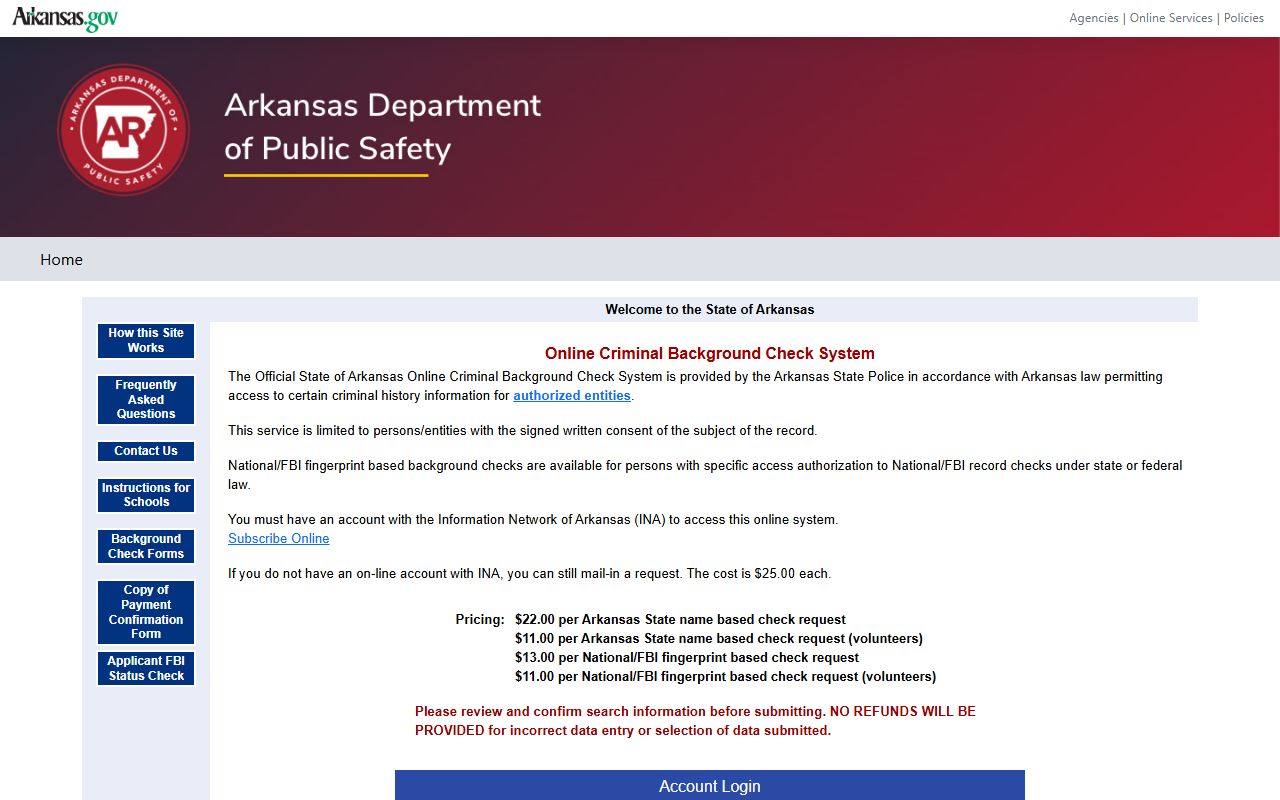
The link above takes you to cbc.ark.org, the official portal run by Information Network of Arkansas. Name-based checks cost $22 per request, or $11 for volunteers. National FBI fingerprint checks are $13, or $11 for volunteers. You need an INA account to run online checks.
Arkansas FOIA and Police Records
The Arkansas Freedom of Information Act, codified at Arkansas Code § 25-19-101 through § 25-19-105, is the law that opens police records to the public. Any citizen of Arkansas can ask to inspect or copy public records during regular business hours. The custodian has three working days to respond. Most routine police records fall under the open rule, from arrest logs to booking photos to incident reports.
Not every Arkansas record is open. The Arkansas statute lists several types of police records that the public cannot see. Undisclosed investigations by Arkansas law enforcement of suspected criminal activity are exempt under § 25-19-105(b)(6). Juvenile records, medical records, undercover officer identities, and concealed handgun license records are also off limits. Arkansas police can redact the names of minors, sensitive witnesses, and parts of sex offense files to protect victims.
The Attorney General updates the FOIA Handbook with every session of the General Assembly. The 2024 edition reflects changes from the 94th General Assembly. The FOIA Hotline is 1-800-482-8982 if you hit a problem with a records request. The FOIA Handbook lives on the Attorney General's public page.
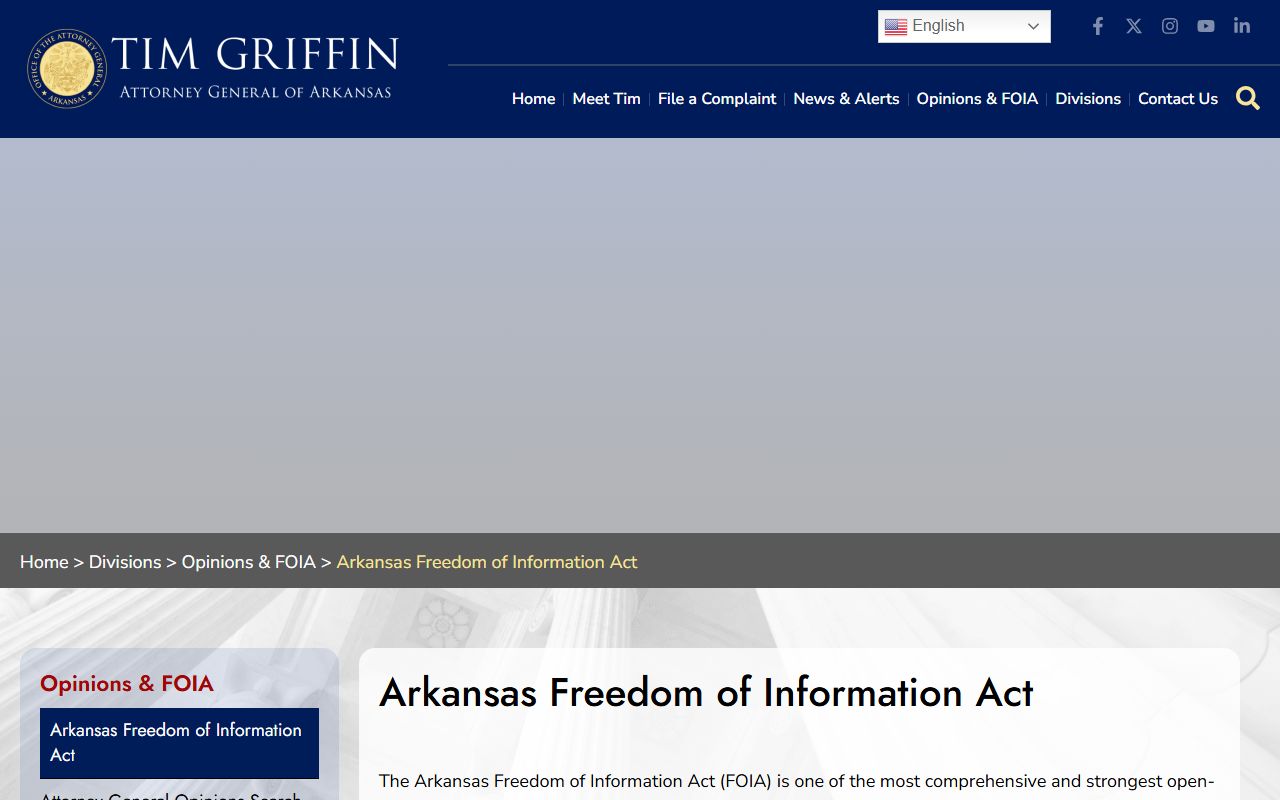
That image comes from the Arkansas Attorney General's FOIA page, which hosts opinions, the full handbook, and contact numbers. If a police agency denies a request, you can appeal to district or circuit court. You can also ask the Attorney General for a non-binding opinion on whether the records should be open.
How to Request Arkansas Police Records
You can ask for Arkansas police records in person, by mail, by phone, by fax, or by email. Arkansas law says any form of request works as long as the custodian can find the records with reasonable effort. Many Arkansas agencies now use online FOIA portals. The Little Rock Police Department FOIA page lays out one typical Arkansas process.
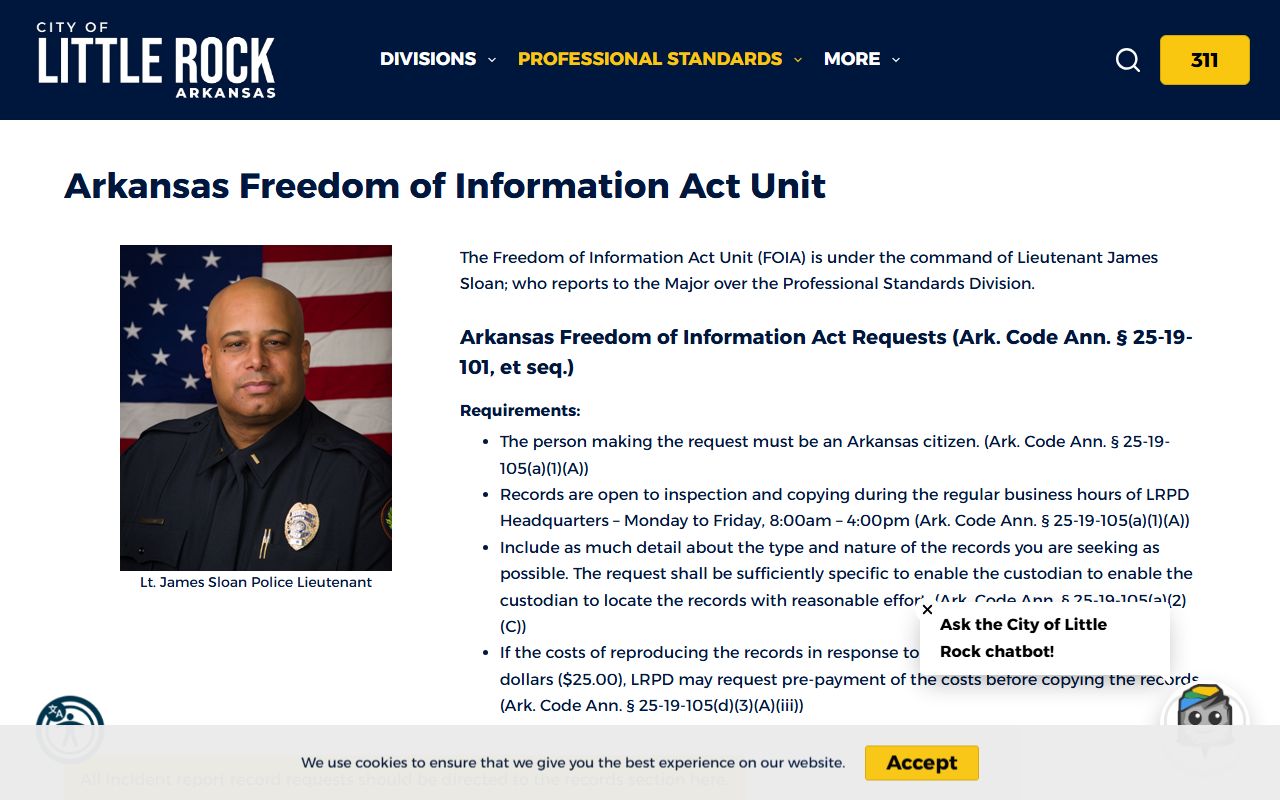
That page is the Little Rock FOIA request page and gives a good model for what most agencies ask. You must be an Arkansas citizen per § 25-19-105(a)(1)(A). Records are open during normal business hours. Your request has to give enough detail to locate the file. If the fee will top $25, the agency can ask for prepayment.
A clear request helps. Include the full name of the subject, the date and location of the incident, the case number if you have it, and your contact info. For crash reports, add the driver's license number and plate. Most city police departments have a records division that handles both in-person pickup and mail requests. Some cities use the JustFOIA portal or NextRequest for online submissions.
- Full name of subject or parties involved
- Date, time, and location of the incident
- Case or report number if known
- Your name, address, and phone number
- Proof of Arkansas residency when asked
Fees vary by agency. Copy rates often run $0.25 per page. Certified copies cost more, usually $2 to $5 per document. Audio and video records may carry an hourly fee for staff review and redaction.
Arkansas CourtConnect for Police Records
CourtConnect is the Arkansas Judiciary's public case search portal. Arrests tied to criminal charges show up as court cases once filed. You can look up the person by name, case ID, or case number. The system returns party names, charges, hearing dates, docket entries, and dispositions. Most circuit and district courts feed into the portal.
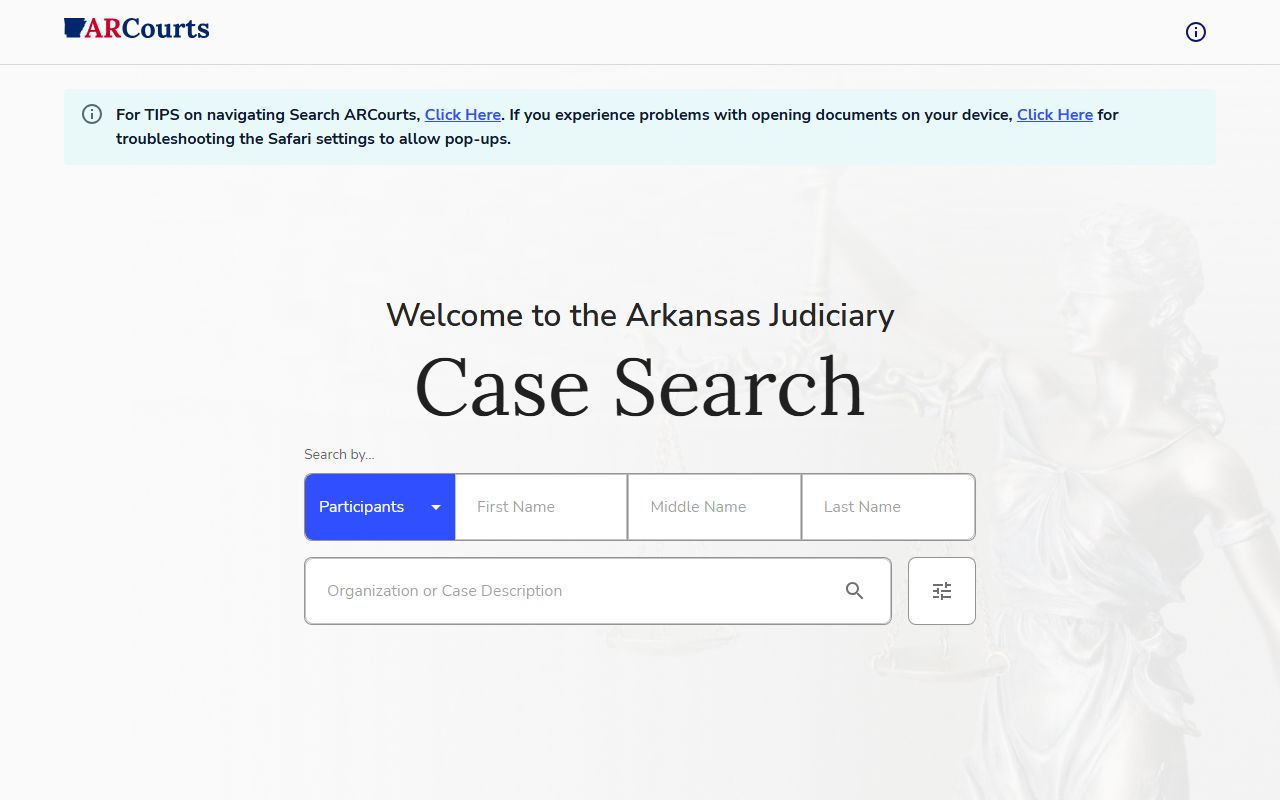
The main CourtConnect portal is online at caseinfo.arcourts.gov/opad. A second entry is at caseinfo.arcourts.gov. Another way to reach the same data is arkansas.thepublicindex.org, the Arkansas Public Index, which adds a few extra search options.
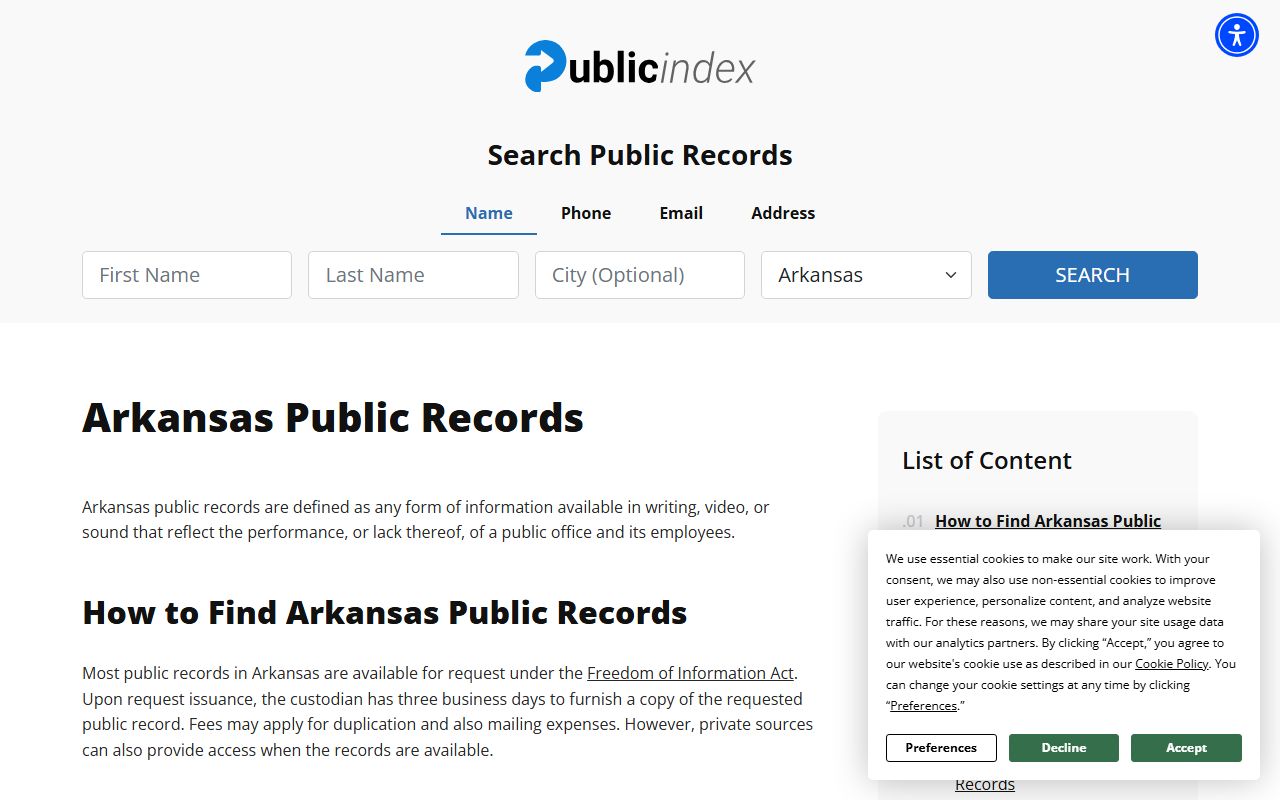
The Public Index hosted at thepublicindex.org lets you search by name, case type, judgment, and docket date. It covers counties like Pulaski, Benton, Crittenden, Faulkner, Garland, Hot Spring, Independence, and many more. The Administrative Office of the Courts in Little Rock runs the system. Help is at acap.help@arcourts.gov or (501) 410-1919.
Arkansas Criminal Background Checks
The Arkansas Crime Information Center was set up in 1971 under Act 1185. ACIC holds the state's central criminal history. The ARCH (Arkansas Criminal History) system lets the public run a personal name-based search for $24 per inquiry. ARCH shows pending felony arrests within the last three years, felony and misdemeanor convictions, and sex offender status. The search does not show juvenile records.
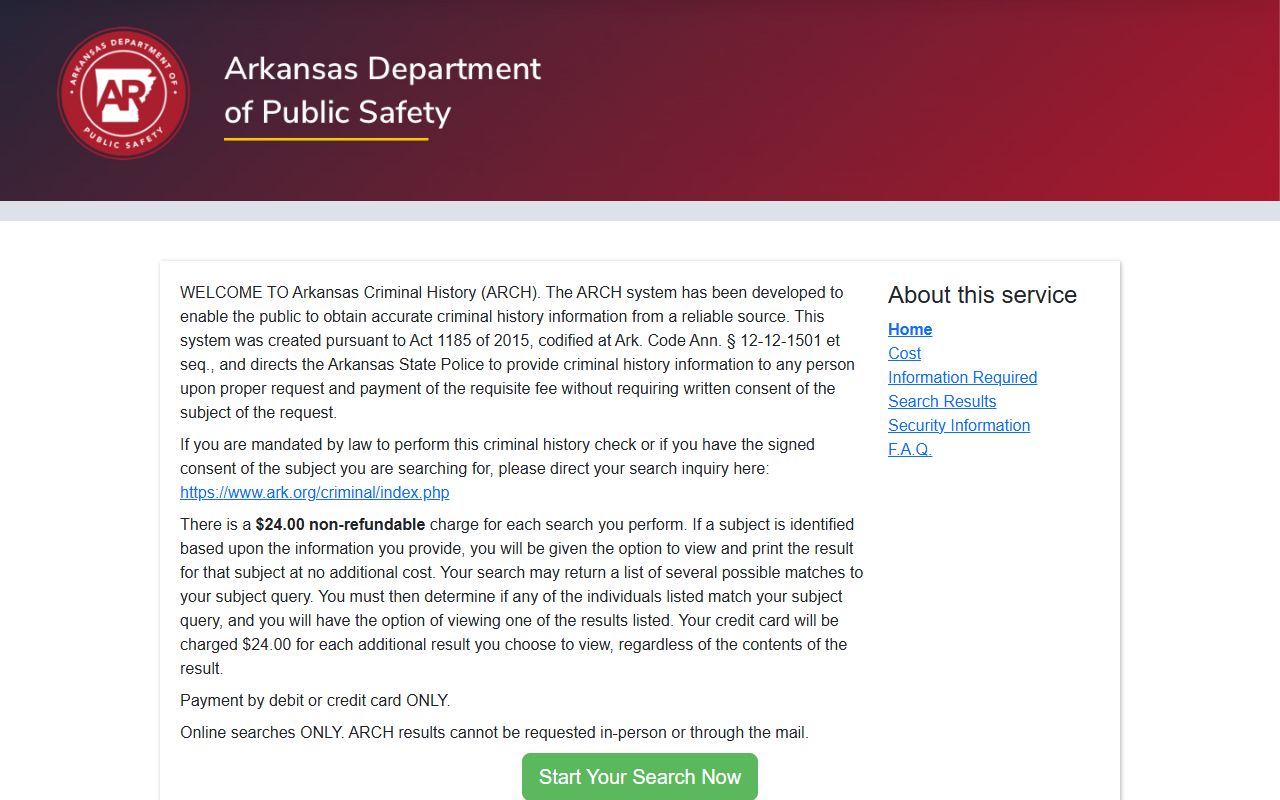
ARCH runs at ark.org/asp/arch. ACIC is based at 322 South Main Street in Little Rock. The phone is (501) 682-2222 and the toll-free line is (800) 482-5866. For a manual, fingerprint-backed check, fill out ASP Form 122 and mail it to the Identification Bureau with $25. Government agencies and some nonprofits can use a lower volunteer rate. A name-based ARCH result is not the same as a fingerprint check and does not prove identity by itself.
Arkansas Sex Offender Registry
The Arkansas Crime Information Center also runs the statewide Sex Offender Registry. The public can search by name, address, ZIP code, or county. The site shows Level 2, Level 3, and Level 4 offenders along with a list of non-mappable offenders. Residents can sign up for alerts when an offender updates an address.
The registry is part of ACIC's public portal. Counties keep their own local copies. Many sheriff's office sites link straight to the state registry or add a county map of registered offenders. The state law on registration is in the Arkansas Sex Offender Registration Act. Failure to register is a felony.
For a check that stops at Arkansas borders, the ARCH tool is cheaper. For national coverage, the FBI fingerprint check through Arkansas State Police pulls from any state that shares prints with the FBI.
Arkansas Inmate and DOC Records
The Arkansas Department of Corrections runs a statewide inmate lookup. You can search by ADC number, name, gender, age, race, county, facility, or offense category. The file updates each Monday. ADC is at PO Box 8707, Pine Bluff, AR 71611. The main number is (870) 267-6999.
County jails hold pretrial detainees and people serving short sentences. Most larger counties post a live jail roster online with booking photos, charges, and bond amounts. Many counties also use VINELink at vinelink.com for victim notifications. Federal inmates housed by the Bureau of Prisons are searchable at the BOP inmate locator, not ADC.
Tip: If you can't find a person on the state inmate list, check the county jail roster where the arrest happened. They may still be in pretrial detention before transfer to the state system.
Arkansas Crash and Accident Reports
Arkansas State Police keeps the central crash file for the whole state. Arkansas crash reports are ready about ten business days after the crash. You can buy a copy online through the Arkansas crash portal, by mail, or in person at Arkansas State Police headquarters. The Arkansas fee is $10 for drivers and owners, $25 for anyone else.
Many Arkansas city police departments also sell crash reports through third-party portals. BuyCrash, run by LexisNexis, covers Little Rock, Rogers, and many Arkansas cities. Jonesboro uses CrashDocs.org. Fort Smith uses the Arkansas State Police eCrash system. Fayetteville charges $10 in person and $15 online through Lexis Nexis, while case reports are free.
For crashes that involved a juvenile, call the state police at 501-618-8130 before trying to buy online. Those files may have extra redaction. Arkansas crash law requires drivers to file an SR-1 report for crashes with injury or damage over $1,000.
Arkansas Statute on Public Police Records
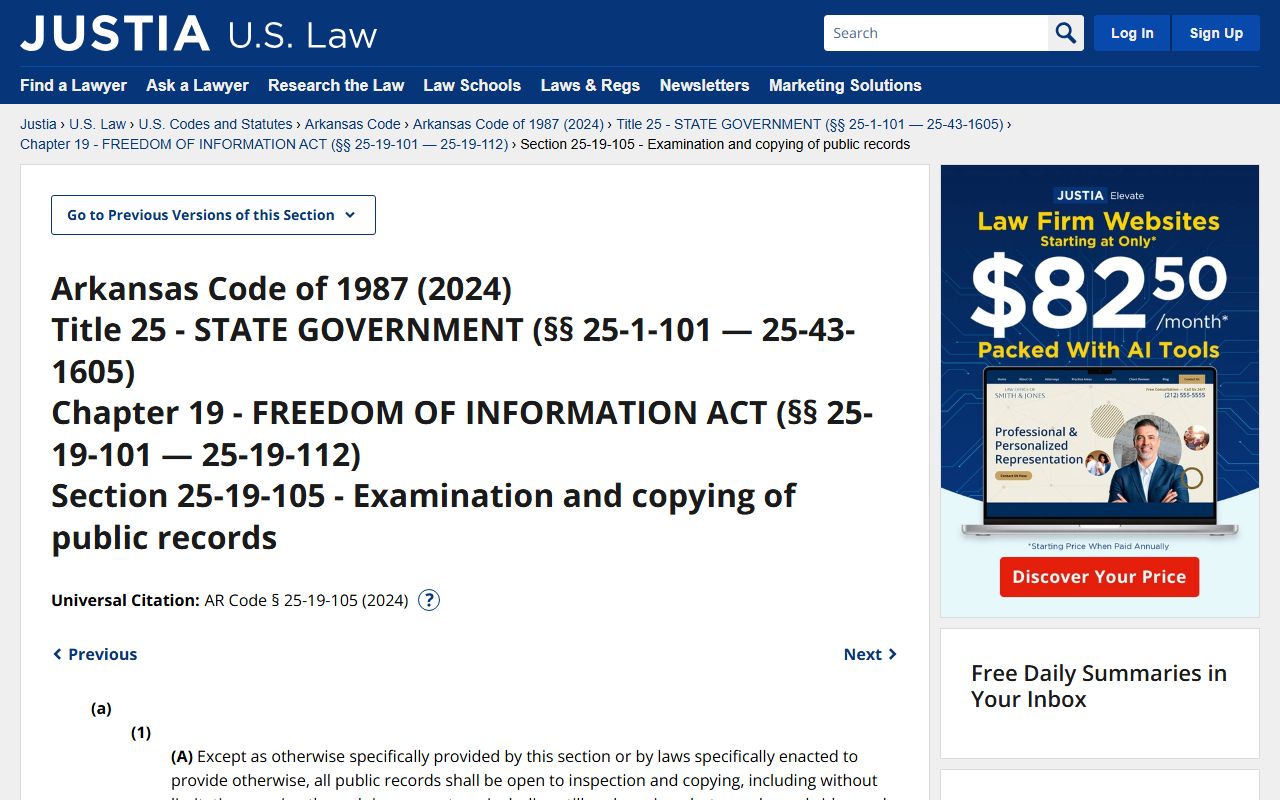
The source image above comes from Arkansas Code § 25-19-105 on Justia. That section is the heart of the state FOIA. It lays out which records are open and which are exempt. The exemption list covers state tax records, adoption files, medical files, grand jury minutes, unpublished drafts of judicial opinions, undisclosed law enforcement investigations, concealed handgun licenses, and a few more.
Under the statute, the custodian must set a date and time within three working days for you to inspect the record. Large requests can run longer if the agency needs to redact sensitive content. If the agency says no, you can appeal to the district or circuit court where the records are held. The appeal process is fast and there's no filing fee for a FOIA appeal in most courts.
What Arkansas Police Records Include
Police records in Arkansas cover a wide range of files. Each agency decides which ones to post online and which you have to ask for. The most common types show up at almost every sheriff's office and city police department. Some specialized files are limited by case, like sex offense reports or juvenile cases.
A typical Arkansas police record set can include:
- Arrest records with booking date, charges, and mugshot
- Incident reports from calls for service
- Accident and crash reports
- Active warrant lists and most-wanted pages
- Jail rosters with current inmates and recent releases
- Sex offender registry entries
- Citations and traffic tickets filed in district court
Retention rules vary. Felony arrest files are usually kept for life. Misdemeanor convictions are kept for at least ten years in most counties. Homicide and sex offense files are permanent regardless of outcome. Juvenile records often close at age 21.
Police Records in Arkansas Counties
Each of the 75 Arkansas counties has its own sheriff's office that holds arrest and jail records. Pick a county below to find local contact info, FOIA steps, and links to county police records resources.
Arkansas Cities with Police Records
City police departments hold incident reports and accident reports inside city limits. Pick a city below to find the local records division, fees, and online request options.